Buying a rental property in Toronto can look straightforward on the surface. You find a property, estimate the rent, calculate your mortgage payment, and determine whether the numbers work.

In reality, evaluating a rental property requires much more than asking, “How much can I rent this for?”

A property can have strong rental demand but poor cash flow. Another property may produce modest rental income today but have significant value-add potential through renovations, a basement conversion, a second unit, or another legally permitted improvement.

For investors looking at the GTA, the goal should be to understand both the property's current performance and its potential.

This guide walks through the key factors to consider when evaluating a rental property in Toronto and the surrounding GTA.

1. Start With the Property, Not Just the Rent


One of the most common mistakes investors make is starting with the expected rental income.

Instead, start by understanding the property itself.

Ask:

  • What type of property is it?

  • What is the current condition?

  • How much work does it need?

  • What are comparable properties renting for?

  • Is the existing layout attractive to tenants?

  • Is there a basement or additional space?

  • Is parking available?

  • Could the property accommodate improvements?

  • Is there potential for a legal second unit or other value-add opportunity?

  • What are the property's long-term strengths and weaknesses?

Two homes with similar purchase prices can have completely different investment profiles.

For example, one Toronto property may be fully renovated and immediately rentable. Another may need significant work but have a better lot, basement, layout or redevelopment potential.

The second property could potentially offer more upside—but only if the numbers and the applicable rules support the strategy.

2. Estimate Realistic Rental Income


The next step is determining how much the property could realistically generate in rent.

Don't base your calculation solely on the highest rental listing you find online.

Look for comparable properties with similar:

  • Location

  • Property type

  • Number of bedrooms

  • Number of bathrooms

  • Square footage

  • Parking

  • Basement or additional living space

  • Renovation quality

  • Amenities

  • Transit access

A renovated three-bedroom house near a major transit connection should not necessarily be compared with an older three-bedroom property in a completely different neighbourhood.

The objective is to determine a realistic market rent, not an optimistic number that makes the investment look better on paper.

Consider Different Rental Scenarios

It can also be useful to run multiple scenarios:

Conservative: What happens if rent is lower than expected?

Expected: What do you reasonably believe the property could rent for?

Optimistic: What happens if the property performs particularly well?

This approach gives you a better understanding of the property's risk rather than relying on one number.

3. Calculate Your Total Monthly Expenses


Rental income is only one side of the equation.

A proper rental property analysis should account for the costs of owning and operating the property.

Depending on the property, these may include:

  • Mortgage payments

  • Property taxes

  • Insurance

  • Utilities paid by the landlord

  • Maintenance

  • Repairs

  • Property management

  • Condominium fees, if applicable

  • Landscaping

  • Snow removal

  • Vacancy allowance

  • Accounting or professional fees

  • Other operating costs

Some expenses are predictable. Others are not.

A roof replacement, HVAC repair or plumbing issue can significantly affect the economics of a rental property.

That's why investors should avoid looking only at the monthly mortgage payment.

4. Don't Forget Vacancy and Maintenance

A rental property isn't necessarily occupied and income-producing every day of the year.

There may be periods between tenants, unexpected repairs, or other situations that reduce your actual income.

Instead of assuming 100% occupancy and zero unexpected expenses, consider building reasonable allowances into your analysis.

For example, ask:

What happens to the investment if the property is vacant for a period of time?

And:

What happens if I have a major repair during the year?

If the investment only works when everything goes perfectly, it may deserve a closer look before you buy.

5. Calculate the Property's Cash Flow

Once you have estimated income and expenses, you can start looking at cash flow.

A simplified calculation is:

Rental Income − Operating Expenses − Debt Costs = Cash Flow

For example, suppose a property generates $4,000 per month in rental income.

You might have:

  • $700 in property taxes and insurance

  • $300 in maintenance and other operating expenses

  • $2,600 in mortgage payments

That would leave approximately $400 per month before considering other potential costs or adjustments.

This is only an illustrative example. Actual expenses and financing costs can vary significantly between properties.

The important point is that you should calculate the numbers before becoming emotionally attached to the property.

6. Look Beyond Monthly Cash Flow

Positive monthly cash flow can be attractive, but it isn't the only reason someone might buy a rental property.

Investors may also consider:

  • Principal repayment

  • Potential long-term appreciation

  • Renovation potential

  • Future rental income

  • Property improvements

  • Land value

  • Development potential

  • Potential for additional units where legally permitted

  • Overall location quality

This is particularly important in the GTA.

A property with mediocre initial cash flow may have characteristics that make it interesting from a longer-term value-add perspective.

For example, a property with a larger lot, desirable location and underutilized space may deserve further investigation.

That doesn't automatically make it a good investment. It means there may be another layer of opportunity to analyze.

7. Evaluate the Location


Location is especially important for rental properties because tenants are not simply renting a building—they are renting access to a particular area.

Consider proximity to:

  • Public transit

  • GO Transit

  • Major roads

  • Employment centres

  • Schools

  • Shopping

  • Restaurants

  • Parks

  • Universities and colleges

  • Hospitals

  • Community amenities

Different tenant groups prioritize different things.

A property near transit and downtown employment may appeal to a different tenant demographic than a suburban property near schools and family-oriented amenities.

Think about who your likely tenant is and whether the property fits their needs.

8. Understand the Tenant Profile


Before buying a rental property, ask yourself:

Who would actually want to live here?

Potential tenant profiles might include:

  • Young professionals

  • Families

  • Students

  • Newcomers

  • Healthcare workers

  • Couples

  • Multi-generational households

Understanding your potential tenant can help you evaluate whether the property's layout and location make sense.

For example, a property with three bedrooms, parking and a backyard may have a very different rental appeal from a compact condominium unit designed primarily for one or two occupants.

9. Examine the Property's Value-Add Potential

This is where a traditional rental analysis can become much more interesting.

Instead of asking only:

“What does this property rent for today?”

Ask:

“What could this property become?”

Look for opportunities such as:

  • Updating an outdated kitchen

  • Improving bathrooms

  • Reconfiguring inefficient spaces

  • Finishing appropriate basement areas

  • Improving curb appeal

  • Adding laundry

  • Improving storage

  • Creating better separation between living spaces

  • Exploring additional dwelling-unit potential where permitted

Not every renovation adds enough value to justify its cost.

The key is determining which improvements actually improve the property's rental appeal, income potential or overall value.

Before undertaking renovations, confirm applicable building, zoning, fire-safety and other requirements with the appropriate professionals and authorities.

10. Investigate Basement and Additional Unit Potential

Basements can be particularly important when evaluating Toronto and GTA rental properties.

An unfinished or underused basement may provide an opportunity to improve the property's functionality.

But investors should be careful.

A basement that looks like it could become a rental unit is not necessarily a legal rental unit.

Before assuming additional rental income, investigate matters such as:

  • Zoning

  • Building permits

  • Fire separation

  • Ceiling heights

  • Egress requirements

  • Electrical and plumbing requirements

  • Entrance requirements

  • Parking requirements where applicable

  • Municipal rules

Requirements can vary depending on the municipality and property.

Never include projected income from an additional unit in your investment analysis until you have confirmed that the proposed use is permitted and feasible.

11. Compare the Purchase Price With the Income

A property's purchase price needs to make sense relative to its income potential.

One basic metric investors may look at is gross rental yield.

A simplified calculation is:

Annual Gross Rental Income ÷ Purchase Price × 100

For example, if a property generates $48,000 in annual rent and costs $800,000:

$48,000 ÷ $800,000 × 100 = 6% gross rental yield

However, gross yield doesn't account for expenses, financing, vacancies or capital expenditures.

That's why it should be treated as a starting point rather than the final answer.

12. Consider the Financing

Financing can dramatically change the economics of a rental property.

Before purchasing, understand:

  • Required down payment

  • Mortgage interest rate

  • Amortization

  • Monthly payment

  • Qualification requirements

  • Closing costs

  • Financing fees

  • Whether the property type affects financing

Investment-property financing can differ from financing for an owner-occupied home.

Mortgage rules and lending policies can also change, so investors should speak with a qualified mortgage professional and confirm current requirements before relying on a particular financing assumption.

13. Don't Ignore Property Taxes and Insurance

A property that appears attractive based on rent can look very different once ownership costs are included.

Property taxes should be incorporated into your analysis, along with insurance and any other recurring expenses.

For properties with unusual characteristics—such as older construction, multiple units or extensive renovations—it can also be important to understand whether insurance costs or requirements could differ.

The goal is to build a realistic operating budget rather than a best-case scenario.

14. Look at the Neighbourhood's Rental Competition

You're not buying a rental property in isolation.

You are competing with other landlords.

Search for comparable rental properties in the area and ask:

  • What are they asking for rent?

  • How quickly are they being rented?

  • What features do they offer?

  • Are they renovated?

  • Do they include parking?

  • Are utilities included?

  • Do they have outdoor space?

  • How does your property compare?

If several similar properties are competing for the same tenants, your projected rent may need to be more conservative.

15. Analyze the Property From an Investor's Perspective

A useful way to evaluate a potential rental property is to look at it from three different perspectives.

The Property Today

What does it offer right now?

Consider the current rent, condition, expenses and tenant appeal.

The Property After Improvements

What could change through strategic renovations?

Could relatively modest improvements make the property more competitive or increase rental income?

The Property in the Future

What could the property potentially become over a longer holding period?

Could there be additional value through redevelopment, additional permitted units, land value or other opportunities?

This doesn't mean assuming that every property will become a development project.

It means learning to recognize when a property has characteristics worth investigating.

16. Run the Numbers Before You Make an Offer

Before making an offer on a rental property, create a simple investment analysis.

At minimum, include:

Item

Estimate

Purchase Price

$_____

Down Payment

$_____

Mortgage

$_____

Expected Monthly Rent

$_____

Property Taxes

$_____

Insurance

$_____

Maintenance

$_____

Utilities

$_____

Property Management

$_____

Vacancy Allowance

$_____

Monthly Cash Flow

$_____

Then run different scenarios.

What happens if:

  • Rent is 10% lower?

  • Interest rates are higher?

  • The property is vacant for a period?

  • Renovations cost more than expected?

  • A major repair is required?

A property that still makes sense under reasonable stress scenarios may be more attractive than one that only works under perfect assumptions.

17. Look for the Opportunity Others May Have Missed

One of the most interesting parts of real estate investing is that the best opportunity isn't always the prettiest property.

A property that needs work may be overlooked by traditional buyers.

An outdated house might have:

  • A strong location

  • A large lot

  • An underused basement

  • An inefficient layout

  • Renovation potential

  • Strong tenant demand

  • Potential for future value creation

The important question isn't simply whether a property needs work.

It's whether the cost of the work creates enough additional value or income to justify the investment.

That's the difference between simply buying a rental property and actually evaluating a real estate opportunity.

FAQ: Evaluating a Rental Property in Toronto

Is buying a rental property in Toronto still a good investment?

There is no universal answer. It depends on the purchase price, financing, rental income, operating expenses, location, property condition and your investment strategy. A property should be evaluated based on its specific numbers rather than a general assumption about the Toronto market.

How much rental income do I need for a property to be a good investment?

There is no single rental-income number that makes a property a good investment. Investors should consider the property's total expenses, financing, vacancy risk, maintenance requirements and long-term potential.

How do I calculate the return on a rental property?

There are several ways to measure investment performance, including gross rental yield, net operating income, cash flow and cash-on-cash return. The appropriate calculation depends on what aspect of the investment you are trying to evaluate.

Should I buy a renovated rental property or a fixer-upper?

It depends on your experience, budget, risk tolerance and the opportunity available. A renovated property may require less immediate work, while a fixer-upper may offer value-add potential. The key is determining whether the renovation cost is justified by the resulting increase in rental appeal, income or property value.

Can I turn a Toronto basement into a rental unit?

Potentially, but you should not assume that an unfinished basement can automatically become a legal rental unit. Zoning, building, fire-safety and other requirements may apply. Always confirm current requirements with the appropriate municipality and qualified professionals before purchasing based on additional-unit assumptions.

Need help?

If you’re thinking about buying, selling, or investing in the GTA, I’d be happy to help you understand what the current market means for your specific situation.

Call me anytime, or click below to view the latest market update and explore homes currently available on the market. 

(647) 207-0470

https://calendly.com/sol-gtaelite

 

...

When most buyers look at a Toronto property, they often focus on the obvious things: the asking price, the number of bedrooms, the condition of the kitchen, and whether they like the house.

Investors look at something different.

They ask:

What could this property become?

That question is at the heart of value-add real estate investing.

A value-add opportunity is a property where there is potential to increase its value through renovation, repositioning, adding income, improving the property’s use, or taking advantage of development potential.

The opportunity isn't always obvious from the listing photos.

Sometimes, the value is in the house.

Sometimes, it's in the lot.

And sometimes, it's in what you can do with the property that the current owner hasn't done yet.

Here are some of the things I look for when evaluating potential value-add opportunities in Toronto.

1. Look Beyond the Current Condition


A property that needs work isn't automatically a good investment.

But a property that needs work can sometimes create an opportunity.

For example, a dated Toronto home may have an outdated kitchen, older bathrooms, poor finishes, or an inefficient layout.

A typical buyer may see a house that needs $150,000 in renovations.

An investor may ask:

Can the layout be improved?

Can the basement become additional living space?

Can the property be converted into multiple units?

What would the property be worth after the improvements?

The important distinction is between a property that needs work and a property where the work creates value.

Not every renovation adds the same amount of value.

2. Pay Attention to the Lot


One of the biggest mistakes buyers can make is focusing entirely on the house and ignoring the land underneath it.

In Toronto, lot characteristics can have a major impact on what a property can potentially become.

When I evaluate a property, I want to understand:

  • Lot width

  • Lot depth

  • Overall lot size

  • Corner-lot characteristics

  • Access to the property

  • Existing setbacks

  • Parking configuration

  • Rear-yard access

  • Location of the existing structure

  • Potential for additions or redevelopment

A house might look ordinary, but a particularly useful lot can create opportunities that aren't immediately visible.

This is especially important when evaluating properties for renovation, additional housing, or redevelopment.

3. Look for Underused Space


Value can sometimes be created by making better use of space that already exists.

Examples can include:

  • An unfinished basement

  • An oversized garage

  • An underused portion of the home

  • An inefficient floor plan

  • An oversized attic

  • A large rear yard

  • Space that could potentially accommodate an addition

But potential isn't the same as permission.

Before assuming that a space can be converted, expanded, or used for another purpose, investors need to confirm the applicable zoning, building-code, servicing and permit requirements.

That's where proper due diligence becomes critical.

4. Consider Additional Income Potential


Another form of value-add is creating additional income from an existing property.

For example, an investor might investigate whether a property could accommodate multiple residential units.

Toronto currently permits four-unit multiplexes city-wide, while six-unit permissions vary depending on location. The City also provides pre-approved building plans for fourplexes and sixplexes as a starting point for certain projects.

That doesn't mean every property can automatically become a fourplex or sixplex.

The specific property still needs to meet zoning requirements, building-code requirements and site-specific conditions, and a qualified design professional is required for the site-specific aspects of a project.

For an investor, however, this creates an important question:

Does this property have the characteristics that could make additional units feasible?

That question can completely change how you evaluate a property.

5. Don't Ignore the Zoning

 One of the most important parts of analyzing a potential value-add property is understanding what is actually permitted.

A property may appear to have development potential, but that doesn't mean the proposed use is allowed.

Before making assumptions, investigate:

  • Current zoning

  • Permitted uses

  • Number of units permitted

  • Building envelope

  • Setbacks

  • Height restrictions

  • Lot coverage

  • Parking requirements

  • Access requirements

  • Applicable overlays

  • Whether approvals or variances may be required

Toronto's multiplex rules, for example, have created additional opportunities for properties that meet the applicable requirements. Four-unit multiplexes are permitted city-wide, while six-unit permissions currently vary by location.

Potential needs to be verified before it becomes part of your investment strategy.

6. Look for Properties That Are Poorly Positioned, Not Necessarily Poor Properties

Sometimes the opportunity isn't that the property is bad.

It's that the property is being marketed to the wrong buyer.

A dated home may turn off an owner-occupier looking for something move-in ready.

An investor may see the same property differently.

A large lot may attract a builder.

A property with an unfinished basement may attract an investor looking for additional income.

A property with an inefficient layout may appeal to someone who can redesign it.

This is why I don't think investors should evaluate a property based only on how attractive it looks today.

You also need to consider who the property could appeal to after the right changes are made.

7. Calculate the Cost of Creating the Value

This is where the numbers matter.

Finding potential is only the first step.

The next question is:

How much will it cost to unlock that potential?

Your analysis may need to include:

  • Purchase price

  • Land transfer tax

  • Legal costs

  • Financing costs

  • Renovation or construction costs

  • Permit and professional fees

  • Property taxes

  • Insurance

  • Utilities

  • Carrying costs

  • Contingency

  • Leasing or property-management costs

  • Selling costs, if applicable

A $100,000 renovation doesn't make sense if it only creates $50,000 of additional value.

The goal isn't simply to find a property that can be improved.

The goal is to find a property where the cost of creating the improvement makes financial sense.

8. Compare the Property Before and After


One of the simplest ways to evaluate a value-add opportunity is to look at the property in two stages.

Today:

What is the property worth in its current condition?

After the improvements:

What could the property potentially be worth after the renovation, conversion, addition or other value-creating work?

Then compare the potential increase in value against the total cost required to achieve it.

For example:

Purchase price: $900,000

Renovation and improvements: $150,000

Other project and carrying costs: $50,000

Total investment: $1,100,000

Potential completed value: $1,300,000

That doesn't automatically make it a $200,000 profit.

You still need to account for financing, transaction costs, taxes, market conditions, timelines and the risks associated with the project.

But this type of analysis helps you determine whether the opportunity deserves a closer look.

9. Think About the Exit Strategy Before You Buy

A strong investor doesn't just ask how they will acquire the property.

They ask how they will eventually get out.

Potential strategies could include:

  • Renovate and sell

  • Renovate and hold

  • Convert to multiple units and rent

  • Improve the property and refinance

  • Build additional housing

  • Hold for long-term appreciation

  • Sell to another investor or builder

The best strategy depends on the property, financing, market conditions and your investment objectives.

A property that makes sense as a long-term rental may not make sense as a flip.

A property with redevelopment potential may have a completely different investment profile.

10. Learn to Recognize "Hidden" Value

Some of the most interesting opportunities don't look impressive at first glance.

They might have:

  • An outdated interior

  • Poor photography

  • Tenants

  • Deferred maintenance

  • An awkward layout

  • An unfinished basement

  • A large lot

  • A desirable location

  • An underused property

  • Development or multiplex potential

The key is learning to separate problems from opportunities.

An outdated kitchen is a problem.

But if the purchase price already reflects the outdated kitchen and the renovation can create significantly more value, it may also be an opportunity.

A large lot isn't automatically valuable from a development perspective.

But if zoning, lot characteristics, servicing and market demand support a particular use, the land may represent significant hidden value.

11. Location Still Matters

Value-add doesn't mean you can ignore location.

In Toronto, location can influence rental demand, resale demand, future buyer interest and the range of potential exit strategies.

When evaluating a property, consider:

  • Transit access

  • Schools

  • Parks

  • Shopping

  • Restaurants

  • Employment areas

  • Waterfront access

  • Major roads

  • Neighbourhood development

  • Nearby new construction

  • Future infrastructure

A great renovation in a weak location may not produce the same result as a well-executed renovation in an established neighbourhood with strong demand.

12. Don't Confuse Potential With Profit

This is probably the most important point.

A property can have development potential and still be a bad investment.

It can have a large lot and still be overpriced.

It can support additional units and still have poor numbers.

It can look like a great fixer-upper and still cost too much to renovate.

Potential is only valuable when the numbers work.

That's why I like to look at a property from multiple perspectives:

What is it today?

What could it become?

What would it cost to get there?

What would it potentially be worth afterward?

What could go wrong?

Those questions help turn a property search into an investment analysis.

A Simple Value-Add Checklist

Before getting too excited about a potential opportunity, ask:

☐ Is the purchase price reasonable for the current condition?

☐ Is there a clear way to add value?

☐ Does the lot have useful characteristics?

☐ Is there underused space?

☐ Could the layout be improved?

☐ Is additional rental income possible?

☐ What does the zoning allow?

☐ Are there potential renovation or development opportunities?

☐ What will the project realistically cost?

☐ What could the property potentially be worth afterward?

☐ What is the expected timeline?

☐ What is the exit strategy?

☐ What happens if costs are higher or the project takes longer than expected?

If you can't answer these questions, you may not have an investment opportunity yet.

You may simply have an interesting property.

The Investor Mindset

The biggest difference between a typical property search and a value-add investment search is the question you ask.

Most buyers ask:

"Do I like this house?"

An investor asks:

"Does the opportunity make sense?"

That means looking beyond the finishes, staging and listing photos.

Look at the land.

Look at the zoning.

Look at the layout.

Look at the income potential.

Look at the renovation requirements.

Look at the future possibilities.

And most importantly, look at the numbers.

Because in Toronto real estate, the most interesting opportunity isn't always the property that looks the best today.

Sometimes, it's the property that has the most potential to become something better tomorrow.

Final Thought

Value-add investing isn't about finding a property that needs work.

It's about finding a property where the work can create meaningful value.

That's the difference.

I'm not just looking at the house.

I'm looking at the opportunity.

This article is for general informational purposes only and is not legal, financial, tax, zoning or development advice. Development and renovation potential must be verified with the appropriate City of Toronto departments and qualified professionals before making an investment decision.

...

Buying an investment property in Toronto is about more than finding a property at the right price. A property can look attractive on the surface and still be a poor investment once you account for financing, property taxes, maintenance, vacancy, repairs, and the actual income the property can generate. On the other hand, a property that looks dated, needs work, or has an unconventional layout could present a significant opportunity if you know what to look for. The key is to stop looking at the property only as a home and start looking at it as an investment.

In this guide, we'll walk through how to analyze an investment property in Toronto, including the numbers, the property itself, the neighbourhood, potential rental income, renovation opportunities, zoning considerations, and the risks you should investigate before making an offer.

What Makes a Good Investment Property?

There isn't one type of property that automatically makes a good investment. Depending on your strategy, you might be looking for:

  • A property with strong rental income

  • A property with potential to increase rents over time

  • A fixer-upper that can be renovated and repositioned

  • A property with a legal or potential secondary suite

  • A duplex, triplex, or fourplex

  • A property with a large lot and future development potential

  • An underperforming property where improvements could increase its value

  • A property in a neighbourhood with strong long-term rental demand

The important question isn't simply: "Is this a good property?" The better question is: "Does this property make sense for my investment strategy?"

  1. Start With Your Investment Strategy

Before looking at individual properties, determine what you are trying to accomplish. Different investors can look at the exact same property and reach completely different conclusions.

For example:

Cash-flow investor You may prioritize rental income, operating expenses, mortgage payments, vacancy, monthly cash flow, and debt service coverage.

Value-add investor You may be more interested in a below-market purchase price, renovation potential, improving the layout, increasing rental income, adding a secondary suite, and improving the property's overall market value.

Long-term appreciation investor You may focus more heavily on location, land value, neighbourhood fundamentals, transit, employment, scarcity of land, and future development potential.

Builder or redevelopment investor The house itself may be less important than the land. You may be evaluating lot size, lot configuration, zoning, permitted uses, development permissions, setbacks, density, parking, and potential building form.

Toronto's zoning rules determine what can be built and how land can be used, including permitted building types, height, density, setbacks and parking requirements. Zoning should therefore be investigated before assuming that a property has development potential. Your investment strategy should determine what numbers and property characteristics matter most.

  1. Calculate the Total Cost of the Investment

One of the biggest mistakes investors make is focusing only on the purchase price. A $1,000,000 property isn't necessarily a $1,000,000 investment.

Your actual acquisition cost can include:

  • Purchase price

  • Land transfer tax

  • Legal fees

  • Inspection costs

  • Financing costs

  • Immediate repairs

  • Renovation costs

  • Insurance

  • Other closing expenses

For properties in Toronto, buyers generally pay both Ontario's provincial land transfer tax and Toronto's municipal land transfer tax. That's why I recommend creating a total project cost before deciding whether a property is a good deal.

Example: Imagine you purchase a property for $900,000. You then estimate:

  • Renovations: $100,000

  • Closing and acquisition costs: $30,000

  • Initial repairs/reserves: $20,000

Your approximate total investment is $1,050,000. The investment should be evaluated based on that larger number—not simply the $900,000 purchase price.

  1. Estimate Realistic Rental Income

Next, determine how much the property could realistically generate. Don't simply use the highest rent you can find online.

Look at comparable rental properties with similar location, property type, number of bedrooms, number of bathrooms, finished area, parking, condition, amenities, and unit quality.

You should also distinguish between current market rent and the rent you realistically expect to achieve after renovations.

For example: Unit 1: $2,500/month ($30,000/year) Unit 2: $2,200/month ($26,400/year) Unit 3: $1,800/month ($21,600/year) Gross Rental Income: $6,500/month ($78,000/year)

But $78,000 isn't your profit. You still need to account for operating expenses and vacancy.

Toronto's rental market has also been changing as new rental supply comes online, so investors should avoid assuming that rents will automatically increase at the same pace every year. CMHC reported a 3.0% vacancy rate in the GTA purpose-built rental market in 2025 and has noted continued easing and increased competition in parts of the rental market in 2026. Use conservative rental assumptions when analyzing a deal.

  1. Calculate Your Net Operating Income

Gross rent isn't the number investors should ultimately use to evaluate the property's operating performance. You need to subtract operating expenses.

Common expenses include:

  • Property taxes

  • Insurance

  • Maintenance

  • Repairs

  • Utilities paid by the owner

  • Property management

  • Landscaping

  • Snow removal

  • Common expenses, where applicable

  • Vacancy allowance

  • Other recurring operating expenses

This gives you your Net Operating Income (NOI).

Basic formula: NOI = Gross Rental Income − Operating Expenses

For example: Annual gross rent: $78,000 Operating expenses: $20,000 Estimated NOI: $58,000

This number becomes extremely important when comparing investment properties.

  1. Understand Cap Rate

One of the most commonly used investment-property metrics is the capitalization rate, or cap rate.

The basic formula is: Cap Rate = NOI ÷ Property Value

For example: If a property produces $60,000 NOI and costs $1,000,000, then Cap Rate = 6%.

However, cap rate should never be viewed in isolation. A property with a higher cap rate isn't automatically a better investment. You still need to consider location, property condition, tenant quality, future expenses, financing, renovation requirements, land value, development potential, liquidity, and long-term appreciation potential.

In Toronto, particularly in higher-value neighbourhoods, an investor may accept a lower initial yield because they are buying a different combination of land, location and future potential.

  1. Calculate Cash Flow After Financing

NOI doesn't include your mortgage payment. That's why you also need to understand your property's cash flow after debt service.

A simplified calculation is: Cash Flow = NOI − Mortgage Payments − Other Financing Costs

For example: NOI: $60,000 Annual mortgage payments: $48,000 Estimated annual cash flow: $12,000 (approximately $1,000 per month)

This is where the financing structure becomes extremely important. Two investors could purchase the same property but have completely different cash-flow results because they have different down payments, interest rates, mortgage terms, amortization periods, and financing structures.

For that reason, don't analyze a property using someone else's mortgage assumptions. Run the numbers based on your actual financing scenario.

  1. Look at Cash-on-Cash Return

Another useful metric is cash-on-cash return. This looks at the annual cash flow relative to the amount of cash you actually invested.

A simplified formula is: Cash-on-Cash Return = Annual Pre-Tax Cash Flow ÷ Total Cash Invested

For example: If you invested $250,000 and the property produces $15,000 in annual cash flow, your approximate cash-on-cash return would be 6%.

This can be useful when comparing different opportunities that require different amounts of upfront capital.

  1. Don't Ignore Property Taxes

Property taxes can have a meaningful impact on your investment numbers. Toronto publishes annual property tax rates, and the rate can differ depending on the property's classification. For 2026, Toronto's published total residential property tax rate is 0.767311%, while the multi-residential rate is different.

Always confirm the property's actual tax information rather than relying on a rough percentage. A property with higher taxes can produce significantly different cash flow than another property with similar rent.

  1. Analyze the Property, Not Just the Numbers

This is where investment-property analysis becomes more interesting. Two properties can have similar financial numbers but completely different potential.

Look at:

Lot

  • How large is the lot?

  • Is it wide or narrow?

  • Is it a corner lot?

  • Is the lot configuration efficient?

  • Is there a laneway?

  • Is there rear access?

  • Is there room for an addition?

  • Could the property have future redevelopment potential?

Layout

  • Number of bedrooms and bathrooms

  • Separate entrances

  • Basement layout and ceiling height

  • Natural light

  • Parking and laundry

  • Potential for separate living spaces

Condition

  • Roof age, windows, HVAC, plumbing, electrical

  • Foundation and basement condition

  • Kitchen and bathrooms

  • Structural concerns

A property requiring $100,000 of work isn't necessarily a bad investment. The real question is: What does that $100,000 of work create?

  1. Look for Value-Add Opportunities

This is one of the areas where experienced investors can sometimes see opportunities that traditional buyers overlook.

For example, you may find a property where:

  • The layout is outdated

  • The basement is unfinished

  • The kitchen is poorly designed

  • There is only one bathroom

  • The property has multiple entrances

  • The exterior needs improvement

  • The rental units are underperforming

  • The property is poorly marketed

  • The existing space could be used more efficiently

The opportunity may not be in buying the cheapest property. It may be in buying a property where your improvements can create more value than they cost.

Example: Purchase price: $850,000 Renovation: $100,000 Total before other acquisition costs: $950,000

If the completed property is worth significantly more—or generates substantially higher rental income—the renovation may have created meaningful value. But don't assume that every renovation adds dollar-for-dollar value. Before proceeding, compare cost of improvement vs. expected increase in value or income.

  1. Investigate Secondary Suites and Multiplex Potential

Toronto investors should pay particular attention to properties with existing or potential multi-unit configurations. Toronto defines a multiplex as a residential building containing two, three or four units. The City also provides guidance on properties where duplexes, triplexes or fourplexes may be permitted, subject to applicable zoning requirements.

However, don't assume that because a house looks like a multiplex, every unit is legal.

Investigate:

  • Zoning and building permits

  • Fire code considerations, electrical, plumbing

  • Separate entrances, ceiling heights, egress

  • Parking and property standards

  • Existing occupancy and applicable municipal requirements

The City of Toronto's Property Information Report can provide information about active building permits, violations, work orders and zoning designation associated with a property. Always verify the legal status and permitted use before assigning value to a potential rental unit.

  1. Check Zoning Before Assuming Development Potential

One of the biggest mistakes an investor can make is seeing a large lot and immediately assuming: "I can build something here." Maybe. Maybe not.

Toronto zoning regulates things such as permitted building types, building height, density, setbacks and parking requirements. Properties can also have site-specific exceptions that affect what is permitted.

Before assigning a value to development potential, investigate:

  1. Current zoning

  2. Permitted uses

  3. Permitted building types

  4. Lot coverage

  5. Height restrictions

  6. Setbacks

  7. Density

  8. Parking requirements

  9. Site-specific exceptions

  10. Applicable planning policies

  11. Required approvals

If the investment thesis depends on redevelopment, professional planning and legal advice may be appropriate. Potential is not the same as permission.

  1. Analyze the Neighbourhood

A great investment isn't only about the property. It's also about the location.

Consider:

Transportation: TTC access, GO Transit, major highways, walkability, future transit improvements. Employment: Major employment centres, hospitals, universities, downtown access, business districts. Amenities: Grocery stores, restaurants, parks, schools, shopping, recreation.

Rental demand: Who is likely to rent this property? Students? Young professionals? Families? Newcomers? Healthcare workers? Tradespeople? Corporate tenants?

Understanding the likely tenant can help you determine whether the property actually fits the local rental market.

  1. Analyze the Exit Strategy

Before purchasing an investment property, ask yourself: How do I get out of this investment?

Your exit strategy could be:

Hold: Keep the property long-term and collect rental income. Renovate and Hold: Improve the property, increase income and hold it as a long-term investment. Renovate and Sell: Improve the property and sell after completing the renovation. Redevelop: Acquire the property with the intention of pursuing a larger redevelopment strategy, subject to approvals. Refinance: Increase the property's value or income, then explore refinancing options to access equity.

You don't necessarily need to know exactly when you will sell, but you should understand why someone else would want to buy the property from you in the future.

  1. Stress-Test the Investment

Never analyze an investment using only the best-case scenario. Ask what happens if rent is lower than expected, the property sits vacant, renovations cost more, construction takes longer, property taxes increase, insurance costs increase, major repairs are required, interest rates change at renewal, the market value doesn't increase, or you have difficulty finding tenants.

A strong investment should ideally have enough margin to withstand some unexpected problems.

Create three scenarios: Best Case: Higher rent + lower renovation costs + strong resale value Base Case: Realistic rent + realistic expenses + reasonable renovation costs Worst Case: Lower rent + higher expenses + unexpected repairs + slower appreciation

If the investment only works under the best-case scenario, that's a warning sign.

  1. Complete Your Due Diligence

Before making an investment-property purchase, investigate the property thoroughly.

Depending on the property, this may include home inspection, title review, property tax information, utility costs, insurance considerations, zoning, building permits, property standards, existing leases, rental history, renovation history, survey, environmental considerations, development restrictions, comparable sales, and comparable rents.

Ontario's land-registration guidance emphasizes due diligence such as visiting the property, conducting appropriate title searches and reviewing available MLS/listing history and making reasonable inquiries.

For more complex investment properties, your lawyer, accountant, mortgage professional, inspector, contractor, architect or planner may each have an important role.

A Simple Toronto Investment Property Analysis

When evaluating a property, I like to organize the analysis into five questions:

  1. What am I buying? Property, lot, location, condition

  2. What does it cost? Purchase + closing + renovation + financing

  3. What does it produce? Rent + other income

  4. What could it become? Renovation, income, suite, multiplex or redevelopment potential

  5. What could go wrong? Vacancy, repairs, zoning, financing and market risk

This framework helps prevent investors from getting distracted by a beautiful kitchen, a low asking price, or a projected rent that hasn't been verified.

Investment Property Analysis Checklist

Before making an offer, consider the following:

Financial

  • Purchase price

  • Closing costs

  • Land transfer tax

  • Renovation budget

  • Financing costs

  • Monthly mortgage payment

  • Gross rental income

  • Vacancy allowance

  • Property taxes

  • Insurance

  • Maintenance

  • Property management

  • Net operating income

  • Cash flow

  • Cap rate

  • Cash-on-cash return

Property

  • Lot size

  • Lot configuration

  • Property condition

  • Layout

  • Parking

  • Basement

  • Separate entrances

  • Mechanical systems

  • Renovation potential

Legal & Planning

  • Zoning

  • Permitted uses

  • Building permits

  • Existing units

  • Property standards

  • Development restrictions

  • Site-specific zoning exceptions

Market

  • Comparable sales

  • Comparable rents

  • Rental demand

  • Vacancy

  • Neighbourhood fundamentals

  • Future development

  • Resale potential

The Best Investment May Not Look Like an Investment

Some of the most interesting Toronto opportunities aren't necessarily the properties with the best-looking numbers on the MLS listing.

Sometimes the opportunity is hidden in:

  • A dated house

  • An oversized lot

  • An inefficient floor plan

  • An underused basement

  • An existing multi-unit configuration

  • A motivated seller

  • A property that needs work

  • A location with strong rental demand

  • A property where the current owner hasn't maximized its potential

That's why property analysis should go beyond: "What is this property worth today?" A more useful question is: "What could this property be worth after the right strategy, investment and improvements?"

That doesn't mean every property has hidden potential. It means you need to know how to identify the difference between a genuine opportunity and an expensive project.

Final Thoughts: Analyze the Opportunity, Not Just the House

Investing in Toronto real estate requires more than finding a property and hoping the market goes up. You need to understand the numbers, the property, the neighbourhood, and, when applicable, what the property could potentially become.

The best investment isn't necessarily the cheapest property or the property with the highest advertised rent. It's the property where the purchase price, income, expenses, location, risks and future potential make sense together.

That's the approach I take when looking at investment real estate. I'm not just looking at the house. I'm looking at the opportunity.

If you're looking for an investment property in Toronto or the GTA, the goal shouldn't simply be to find a property. The goal is to find the right opportunity for your investment strategy.

...

Toronto is making it easier to explore one of the biggest opportunities in residential real estate: adding more housing units to existing properties.

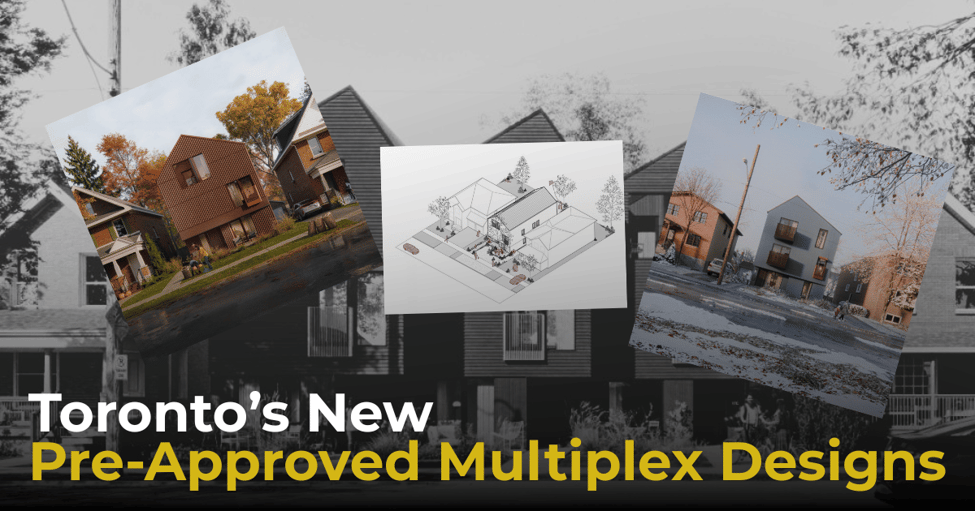
On October 2, 2026, the City of Toronto announced the launch of new pre-approved multiplex building designs for fourplexes and sixplexes.


The goal is straightforward: make it easier for homeowners, investors and builders to add more homes while reducing some of the time, cost and uncertainty involved in getting a project started.

For Toronto real estate investors, however, the bigger question isn't simply, “What are the new multiplex designs?”

The more interesting question is:

“What could this mean for the value of certain Toronto properties?”

A property that previously looked like an ordinary single-family home could potentially be evaluated very differently if its lot, zoning and configuration can support a fourplex or sixplex.

Here’s what you need to know.

What Are Toronto’s New Pre-Approved Multiplex Designs?

The City of Toronto has expanded its existing Pre-Approved Building Plans Program.

The program now includes free, made-in-Toronto designs for:

  • Fourplexes

  • Sixplexes

  • Narrow lots

  • Wide lots

  • Different HVAC configurations


The designs were developed with Toronto neighbourhoods in mind and consider factors such as accessibility, climate resilience, cost and ease of construction.

The available designs include options for both fourplexes and sixplexes, with different configurations depending on lot width and building systems.

This gives property owners a starting point rather than requiring them to design a multiplex entirely from scratch.

Why Is This Important for Toronto Real Estate?

Toronto has been working to create more “missing middle” housing—more homes in established neighbourhoods between traditional detached houses and larger apartment buildings.

Multiplexes are an important part of that strategy.

Instead of having one detached house on a residential lot, a property could potentially accommodate multiple dwelling units.

For an investor, that changes the way you might evaluate the property.

Instead of asking:

“What is this house worth?”

You might also ask:

“What is this lot capable of supporting?”

That distinction can be significant.

Fourplexes and Sixplexes: What Investors Need to Know

One of the most important points for investors is that not every property automatically qualifies for every type of multiplex.

Fourplexes are currently permitted city-wide under the applicable rules, while sixplex permissions can vary depending on the location and property.

If a proposed multiplex meets the applicable zoning requirements, an owner may be able to proceed directly to a building permit application without going to the Committee of Adjustment.

However, investors should never assume that a property qualifies simply because it has a large lot.

The property's specific zoning, lot characteristics and other requirements still need to be investigated.

Potential is not the same thing as permission.

What Does “Pre-Approved” Actually Mean?

This is another important distinction.

A pre-approved plan does not mean the City has automatically approved your particular property for construction.

The designs have been pre-reviewed for compliance with applicable Building Code and zoning requirements relating to the building design.

However, site-specific requirements still need to be reviewed as part of the building permit application.

Depending on the property, this could include:

  • Property lines
  • Lot dimensions
  • Building placement
  • Setbacks
  • Building height
  • Parking
  • Driveway configuration
  • Grading
  • Landscaping
  • Trees
  • Easements
  • Servicing
  • Existing structures
  • Site-specific Building Code requirements

Think of the pre-approved design as a head start—not a guaranteed approval.

Does This Mean You Can Build a Multiplex Without an Architect?

No.

Even though the City has provided the building designs, a qualified design professional is still required to review and take responsibility for the site-specific aspects of the project.

The site-specific work can include:

  • Site plans
  • Building placement
  • Structural considerations
  • Grading
  • HVAC
  • Plumbing
  • Electrical
  • Building Code requirements
  • Zoning requirements

The City also requires professional documentation as part of the permit submission.

One Important Detail: Modifications Can Change the Process

Investors should pay close attention to this.

If you significantly modify a selected pre-approved plan, it may no longer qualify for the pre-approved-plan application process.

The City notes that certain modifications, including HVAC or plumbing modifications, can cause a plan to lose its pre-approved status. In that situation, the regular application process would apply.

This is one reason it's important to work with qualified professionals before assuming that a particular design will work for your project.

What Does This Mean for Investors?

This is where things get interesting.

The new program could make it easier to evaluate and potentially pursue multiplex opportunities, particularly on properties that already have characteristics suited to multi-unit development.

When analyzing a Toronto property, investors may want to look beyond the existing house.

Consider these factors:

1. Lot Width

A wider lot may provide different design possibilities than a narrow lot.

The City has specifically created both wide- and narrow-lot designs, making lot dimensions an important part of the initial analysis.

2. Lot Depth

Lot depth can affect:

  • Building placement
  • Outdoor space
  • Parking
  • Access
  • Landscaping
  • Overall site configuration

3. Existing House

Ask whether the existing building should be:

  • Renovated
  • Converted
  • Expanded
  • Reconfigured
  • Replaced

The best strategy isn't always demolition.

Sometimes the existing structure creates a different value proposition.

4. Parking

Parking requirements and site configuration can materially affect what can be built.

A theoretical six-unit project may look attractive on paper but become much more complicated once the entire property has to be designed around access, parking, waste storage, servicing and other requirements.

5. Existing Services

A larger project can create additional demands on:

  • Water
  • Sanitary services
  • Electrical
  • HVAC
  • Drainage

These should be investigated before purchasing a property based on a development assumption.

The New Opportunity: Looking at Properties Differently

This is where the change becomes particularly relevant to how investors should evaluate Toronto real estate.

Imagine two houses listed for sale at similar prices.

Property A

  • Recently renovated
  • Beautiful kitchen
  • Finished basement
  • Great curb appeal

Property B

  • Dated interior
  • Needs renovation
  • Larger lot
  • Better configuration for multiple units
  • Potential to create more housing

A traditional buyer may immediately prefer Property A.

An investor might spend more time analyzing Property B.

Why?

Because the value may not be in the finishes.

The value may be in the land and what the property can potentially become.

A New Way to Analyze Toronto Multiplex Opportunities

If you're looking at a property as a potential fourplex or sixplex, start with these questions:

Step 1: What does the property allow?

Review:

  • Zoning
  • Permitted number of units
  • Lot dimensions
  • Applicable zoning standards
  • Site-specific restrictions

Step 2: Does the lot work?

Look at:

  • Width
  • Depth
  • Access
  • Parking
  • Existing structures
  • Trees
  • Easements
  • Grading

Step 3: Which pre-approved design could potentially fit?

The City's catalogue includes narrow- and wide-lot options for both fourplexes and sixplexes.

Step 4: What will the project actually cost?

Don't stop at construction costs.

Consider:

  • Acquisition
  • Closing costs
  • Demolition
  • Design professional costs
  • Permits
  • Construction
  • Financing
  • Landscaping
  • Utility upgrades
  • Contingency
  • Carrying costs

Step 5: What will the finished property be worth?

This could be based on:

  • Rental income
  • Comparable multi-unit properties
  • Individual unit values
  • Long-term appreciation
  • Investor demand

Step 6: Does the project still make financial sense?

This is the most important question.

A property isn't an opportunity simply because it can theoretically accommodate more units.

The numbers still have to work.

Could This Increase the Value of Some Toronto Properties?

Potentially—but investors need to be careful about how they interpret development potential.

If a property has characteristics that make multiplex development more feasible, that potential could influence how an investor evaluates the land.

However, development potential isn't automatically reflected in the market value.

The actual value depends on factors such as:

  • Purchase price
  • Construction costs
  • Financing
  • Permitting
  • Market rents
  • Completed property value
  • Timeline
  • Risk
  • Site constraints

A property with a large lot isn't necessarily a development opportunity.

A smaller property with the right configuration could potentially be more interesting.

It's the combination of zoning, land, design, economics and location that matters.

What About Existing Multiplexes?

The new plans aren't only relevant to someone buying a vacant lot.

Existing properties with multiple units can also be interesting to investors.

For example, an investor might evaluate:

  • Existing duplexes
  • Triplexes
  • Fourplexes
  • Properties with legal secondary units
  • Properties with potential for additional units

The key is verifying what is actually permitted and what is legally existing.

Never assume that because a property contains multiple kitchens or entrances, every unit is legal.

Due diligence remains essential.

Why This Could Matter in Neighbourhoods Across Toronto

One of the interesting aspects of the program is that the City designed the plans to work across different neighbourhood contexts and lot types.

The program also builds on the City's previous pre-approved garden and laneway suite plans, which were created to make adding housing easier.

The City is essentially trying to make the early stages of housing creation more accessible.

Instead of every homeowner or small-scale builder starting with a blank page, there is now a catalogue of designs that can provide a starting point.

For smaller investors and homeowners, that could make the idea of a multiplex project feel more attainable.

What Investors Should Watch Out For

The new program is promising, but there are still plenty of reasons to perform proper due diligence.

Don't assume every lot works.

A pre-approved design still has to work on the specific property.

Don't assume construction will be inexpensive.

A free building design doesn't mean a low-cost construction project.

Don't assume six units are permitted everywhere.

Sixplex permissions vary by location.

Don't assume the permit is guaranteed.

Site-specific requirements still need to be addressed.

Don't build your investment analysis around projected rent alone.

Construction costs, financing, vacancy, taxes, maintenance and operating expenses all matter.

Don't ignore the exit strategy.

Think about who will ultimately buy or rent the completed property.

What This Means for Buyers Looking for Investment Opportunities

The biggest takeaway may be broader than the new plans themselves.

Toronto real estate investors should increasingly learn to look at properties through a land-and-use perspective, rather than simply comparing kitchens, bathrooms and finished square footage.

When you see a property, ask:

What is here today?

Then ask:

What could potentially be here tomorrow?

That doesn't mean assuming every property can be redeveloped.

It means knowing which questions to ask before dismissing a property—or paying a premium for potential that isn't actually there.

A Toronto Multiplex Opportunity Checklist

If you're evaluating a property for potential multiplex use, consider:

Property

  • Lot width
  • Lot depth
  • Lot configuration
  • Existing building
  • Parking
  • Access
  • Basement
  • Existing entrances
  • Trees
  • Easements

Planning

  • Current zoning
  • Number of permitted units
  • Fourplex eligibility
  • Sixplex eligibility
  • Setbacks
  • Height
  • Density
  • Site-specific restrictions

Construction

  • Demolition requirements
  • Construction budget
  • Design professional costs
  • Permit costs
  • Utility requirements
  • Financing
  • Carrying costs
  • Contingency

Investment

  • Expected rents
  • Operating expenses
  • Property taxes
  • Insurance
  • Financing costs
  • Expected completed value
  • Return on investment
  • Exit strategy

The Bottom Line

Toronto's new pre-approved multiplex designs are an important development for homeowners, investors and small-scale builders.

The City is now providing free, made-in-Toronto designs for fourplexes and sixplexes, including options for both narrow and wide lots. The intention is to give property owners a head start and make the process of creating additional housing more straightforward.

But the opportunity isn't simply about having access to a set of building plans.

The bigger opportunity is learning to identify properties where the land, zoning, design possibilities and economics come together.

For investors, that means looking beyond the house.

A dated property with the right lot may deserve a closer look than a beautifully renovated home.

A property with four existing units may deserve a different analysis than a traditional single-family rental.

And a property that appears ordinary on the MLS may have potential that isn't immediately obvious.

That's why real estate analysis starts with a simple question:

What could this property become?

If you're looking at Toronto real estate from an investment, renovation or development perspective, understanding multiplex opportunities can help you evaluate properties with a very different lens.

Important Note

This article is for general informational and educational purposes only and is not legal, planning, construction, financial, tax or investment advice. Zoning permissions, Building Code requirements, costs and municipal processes can change and are specific to individual properties. Before purchasing or developing a property, consult the City of Toronto and the appropriate qualified professionals.

...