
.webp)
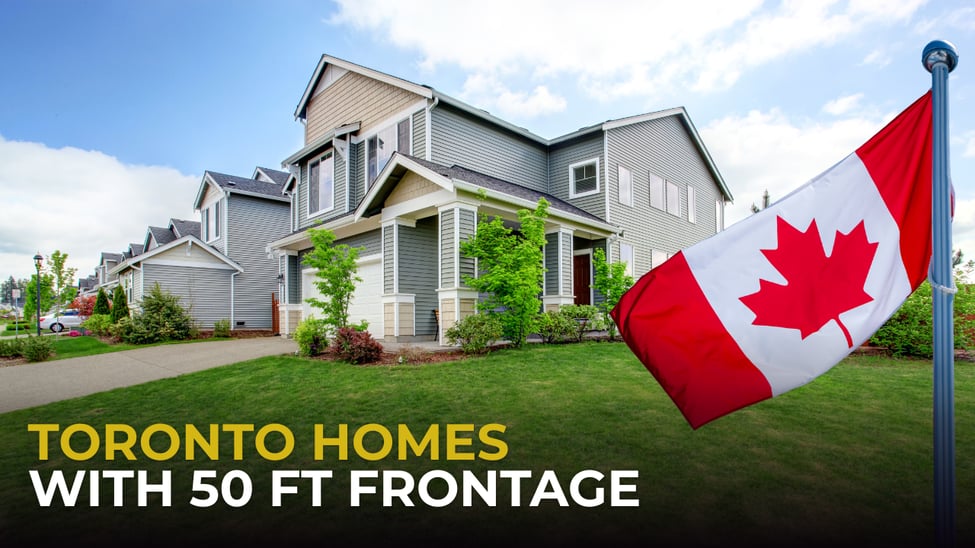
A property's value is not always defined by the house that stands on it. Sometimes, the land itself presents opportunities worth exploring.
In Toronto, detached homes with 50 feet of frontage can attract buyers who want more space, investors looking for value-add opportunities, and builders evaluating properties for potential redevelopment. A wider lot may offer greater flexibility for renovations, additions, landscaping, and other improvements, depending on the property's layout and applicable regulations.
However, not every wide lot is a redevelopment opportunity, and not every older home is worth renovating. Understanding the property's dimensions, zoning, condition, and long-term potential is essential before making a decision.
In this guide, we'll explore what 50-foot frontage means, why it matters, and what buyers should consider when evaluating these properties in Toronto.
What Does 50-Foot Frontage Mean?
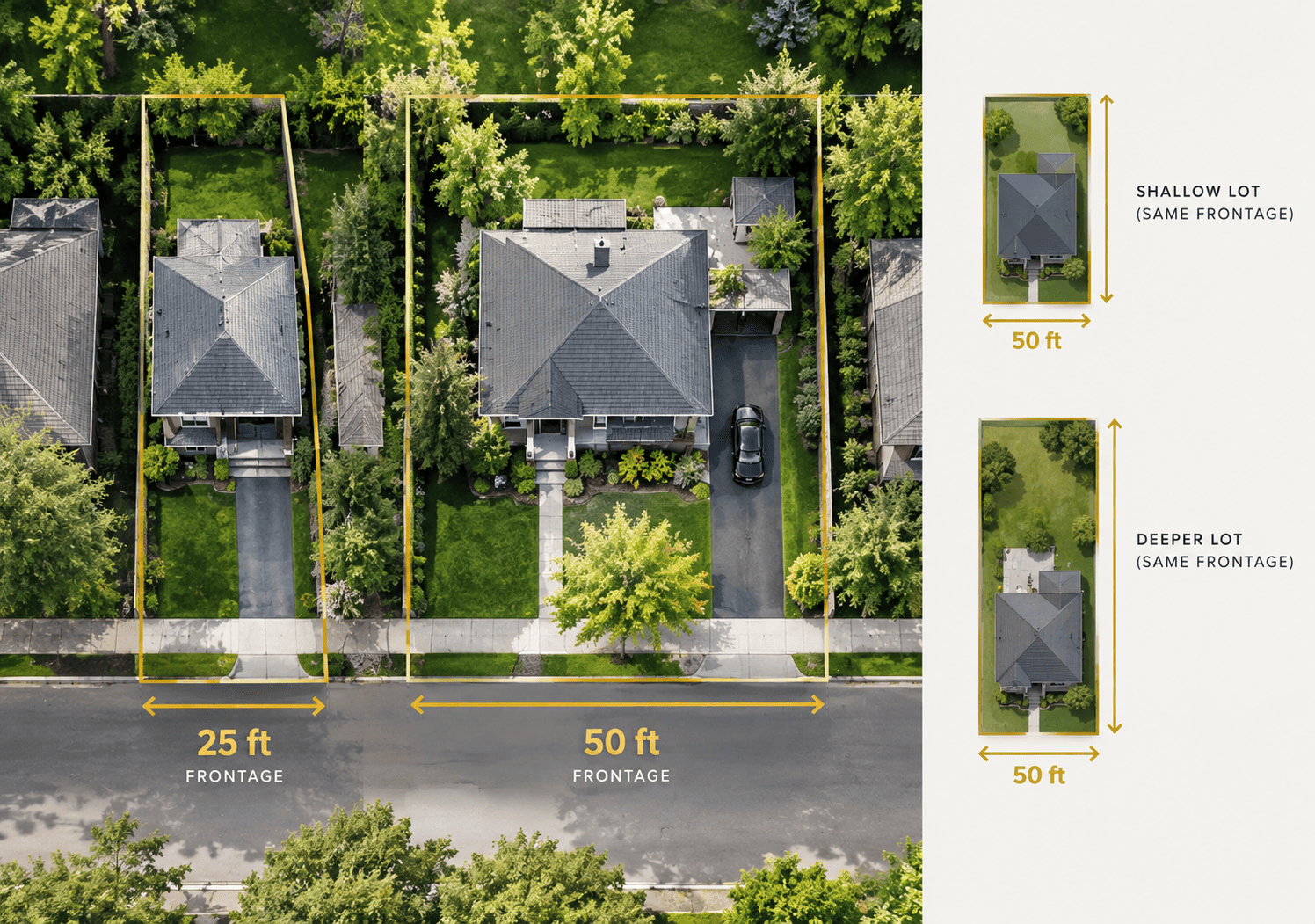
Frontage refers to the width of a property along the street it faces. A home with 50-foot frontage has approximately 50 feet of width at the front property line, although the actual lot configuration may vary.
For example, consider two detached homes with similar interior living space. One sits on a 25-foot-wide lot, while the other sits on a 50-foot-wide lot. The wider property may provide more room for side-yard access, landscaping, building additions, or changes to the existing layout.
The difference is not simply about having a larger yard. Lot width can influence how a property is designed, used, and evaluated for future improvements.
It is also important to distinguish frontage from total lot area. A 50-foot-wide property with a shallow lot may offer very different possibilities from one with the same frontage and significantly greater depth.
Why Are Toronto Homes with 50-Foot Frontage Worth Exploring?
Toronto has a wide range of residential properties, from compact urban lots to larger detached homes on established streets. For buyers interested in long-term flexibility, a wider lot can be an attractive feature.
Here are several reasons these properties may deserve a closer look.
1. More Flexibility for Renovations and Additions
Some buyers are interested in improving an existing home rather than purchasing a newly renovated property at a premium.
Depending on the lot, building setbacks, and applicable rules, a wider property may provide opportunities to explore additions, interior reconfigurations, or other improvements.
For example, a buyer might consider updating an older detached home, improving its layout for a growing family, or expanding selected living areas where permitted.
The key is to assess the existing structure and determine whether the cost of improvements makes financial sense.
2. Potential for Value-Add Investments
Value-add real estate involves identifying properties that may be improved through renovations, better use of space, or other permitted changes.
A detached home on a 50-foot lot may appeal to investors who see an opportunity to improve a property's functionality, condition, or market appeal.
Potential strategies include:
Renovating an outdated kitchen or bathroom.
Improving the home's layout and overall condition.
Exploring a permitted secondary suite.
Assessing whether an addition could improve usability or value.
Enhancing curb appeal and outdoor space.
These improvements do not automatically guarantee a higher return. Investors should compare the purchase price, renovation budget, carrying costs, and realistic resale or rental value before committing.
3. Multiplex and Additional Rental Possibilities
Some buyers look for properties that could accommodate more than one dwelling unit. Toronto's multiplex permissions make this an important area to investigate for eligible residential properties.
Depending on the property's zoning, building configuration, servicing, and applicable regulations, a buyer may explore options such as a secondary suite or a multiplex conversion.
A wider lot can be a useful starting point for evaluating design possibilities, but frontage alone does not establish what can legally be built.
Before purchasing, verify the property's permitted uses, applicable zoning provisions, building-code requirements, parking or access considerations where relevant, and any necessary approvals.
Buyers should also account for the cost of construction, fire and life-safety upgrades, separate entrances, utilities, and other requirements that may apply.
4. Potential Redevelopment Opportunities
For builders and experienced investors, the existing house may be only one part of the property's value.
A larger lot could be worth assessing for potential redevelopment, subject to zoning, permitted building envelopes, setbacks, height limits, lot coverage, servicing, and other applicable requirements.
However, it is important not to assume that a 50-foot frontage automatically allows a property to be divided into multiple lots or replaced with a larger development.
A proper feasibility assessment may require consultation with qualified planning and design professionals, along with a review of municipal requirements.
The objective is to determine what is realistically achievable before spending money on a purchase or development plan.
Who Should Consider Buying a Toronto Home with 50-Foot Frontage?
Not every buyer needs a wide lot, but this property feature may be particularly relevant to several groups.
Homebuyers Looking for Long-Term Flexibility
Families or individuals planning to stay in a home for many years may value additional outdoor space and the possibility of improving the property over time.
Instead of paying for a fully renovated home, some buyers may prefer to purchase a property that better suits their lot requirements and renovate gradually, provided the costs and plans are realistic.
Real Estate Investors
Investors may be interested in properties where targeted improvements could enhance rental appeal, functionality, or future resale prospects.
The right investment depends on the purchase price, the local market, renovation requirements, and the property's income or resale potential—not just the lot width.
Renovators and Value-Add Buyers
Renovators may look for older detached homes with layouts or finishes that no longer meet current buyer expectations.
A wider lot may offer additional design flexibility, although the existing structure, condition, and renovation restrictions must be evaluated carefully.
Builders and Redevelopment Buyers
Builders may examine lot dimensions, neighbourhood context, planning regulations, and the feasibility of replacing or significantly altering an existing structure.
For these buyers, professional due diligence is especially important because the potential project must be evaluated against development costs, timelines, and municipal requirements.
What Should You Check Before Buying a 50-Foot Frontage Property?
A wide lot can be appealing, but it should never be the only factor in a purchasing decision.
1. Verify the Actual Lot Dimensions
Confirm the property's frontage, depth, and total lot area using reliable property records and, where necessary, a survey.
Do not rely exclusively on a listing description. Irregular lot shapes, corner configurations, easements, or discrepancies in recorded measurements may affect how the land can be used.
2. Review Zoning and Permitted Uses
Determine what the property is legally permitted to accommodate today and what approvals would be required for your proposed plans.
If you're considering a multiplex, an addition, or redevelopment, review the applicable zoning and municipal requirements before assuming the project is feasible.
3. Assess the Existing Home
For a renovation project, evaluate the property's structural condition, roof, foundation, electrical systems, plumbing, insulation, and other major components.
A home that appears inexpensive may require extensive work. A professional inspection can help identify issues that could materially affect your budget.
4. Understand the Total Investment
Calculate more than the purchase price.
Your budget may need to include land transfer tax, legal fees, financing, insurance, renovation or construction costs, permits, professional services, property taxes, utilities, and carrying costs.
For rental properties, assess realistic rent, vacancy assumptions, maintenance, management costs, and financing expenses.
5. Research the Neighbourhood
Consider comparable sales, local housing demand, nearby amenities, transit access, and the types of homes buyers or tenants are seeking in the area.
Neighbourhood context can influence both the practicality of an improvement and the property's eventual resale or rental appeal.
6. Confirm Feasibility Before Committing
If your purchase depends on a specific renovation or development outcome, obtain appropriate professional advice before proceeding.
A planner, architect, designer, contractor, or other qualified professional may help determine whether the proposed project is feasible and what it could cost.
Where appropriate, buyers should also discuss suitable contractual conditions and due-diligence timelines with their real estate and legal professionals.
Is a 50-Foot Frontage Property Always a Better Investment?
Not necessarily.
A wider lot can create additional possibilities, but the property's value depends on much more than its dimensions.
An expensive home on a wide lot may offer less investment potential than a fairly priced property requiring manageable improvements. Likewise, a property with attractive redevelopment prospects may become financially unviable if construction costs are too high or the necessary approvals cannot be obtained.
A useful starting point is to compare three things:
Current value: What is the property worth in its present condition?
Improvement potential: What changes are legally possible, and what would they cost?
Future value: What is a realistic resale value or income potential after the improvements?
The difference between a promising opportunity and an expensive mistake often comes down to the quality of the due diligence.
Explore Toronto Detached Homes with at Least 50 Feet of Frontage
If you're searching for a detached home with a wider lot, it helps to review available properties and compare their dimensions, locations, asking prices, and existing conditions.
Some homes may be better suited to families looking for additional outdoor space. Others may warrant further investigation for renovation, rental, or redevelopment possibilities.
The important step is to evaluate each property individually rather than assuming that all homes with 50-foot frontage offer the same opportunities.
Browse available Toronto detached homes with a minimum of 50 feet of frontage:
Looking for a Property with Potential?
The right real estate opportunity is not always the most polished property on the market. Sometimes, it is a home with the right location, lot dimensions, purchase price, and potential to meet your long-term goals.
Whether you're a homebuyer, investor, renovator, or builder, evaluating the property beyond its current appearance can help you make a more informed decision.
If you're considering a Toronto property with 50-foot frontage, connect with Sol Yasin to discuss your goals and identify the factors worth investigating before you buy.
Thinking about buying, renovating, or investing in Toronto real estate? Start by exploring the available listings and consider the property's current value alongside its realistic future potential.