
.webp)
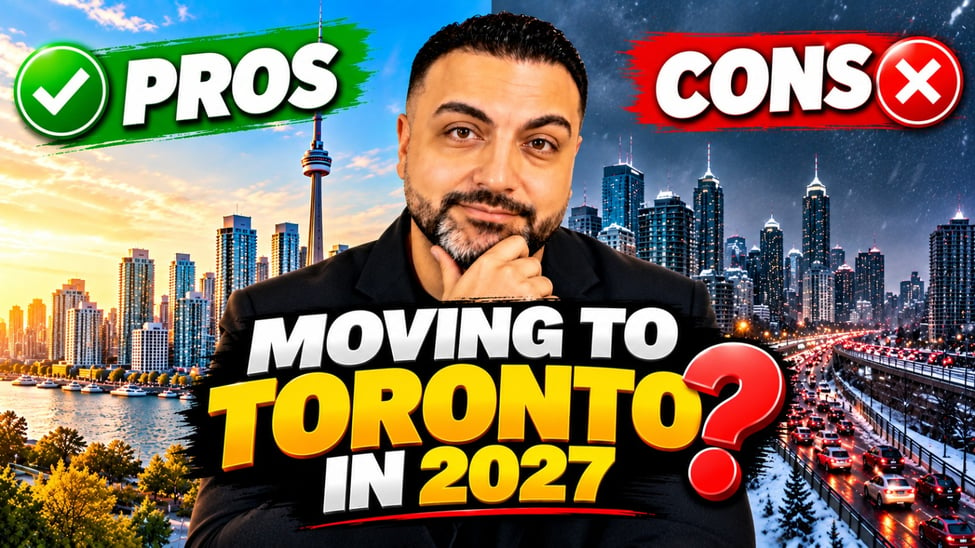
Thinking about moving to Toronto in 2027? Canada's largest city offers exciting career opportunities, diverse neighbourhoods, convenient amenities, and a lifestyle that attracts people from across Canada and around the world.
But before you pack your bags, there are a few things you should understand.
While Toronto can offer an incredible opportunity for newcomers, the cost of housing, transportation, and everyday living can be higher than many people initially expect. Where you choose to live can also make a significant difference in your overall experience.
Whether you're relocating from Vancouver, Calgary, another Canadian city, or overseas, understanding the advantages and disadvantages of living in Toronto can help you make a more informed decision.
Let's explore the biggest pros and cons of moving to Toronto in 2027, along with some important considerations before choosing your next home.
1. The Advantages of Living in Toronto
Toronto continues to attract newcomers because of its employment opportunities, cultural diversity, and variety of lifestyle options. Here are three major advantages worth considering.
Career Opportunities Across Different Industries
One of Toronto's biggest advantages is its diverse employment market.
The city is home to businesses and professional networks across industries such as finance, technology, healthcare, education, construction, media, and professional services.
For individuals with relevant experience and in-demand skills, Toronto may offer opportunities to advance their careers, build professional connections, and explore new industries.
However, your experience will depend on your profession, qualifications, and the job market when you arrive. It's worth researching employment opportunities before making the move.
A Wide Variety of Neighbourhoods and Lifestyles
One thing that makes Toronto unique is that there's no single way to experience the city.
Some people prefer downtown living, where condos, restaurants, shops, entertainment, and public transportation are often within walking distance.
Others prefer established residential neighbourhoods with detached homes, larger properties, parking, and access to schools and parks.
And if you're open to living outside Toronto, the Greater Toronto Area (GTA) offers even more options.
Communities such as Mississauga, Brampton, Vaughan, Markham, Richmond Hill, Oakville, and Milton each offer different housing options and lifestyles.
The key is finding a location that matches your priorities, whether that's convenience, space, affordability, or accessibility.
Transit, Food, Culture, and Entertainment
Toronto offers a wide range of transportation, dining, shopping, and entertainment options.
Depending on where you live, you may have convenient access to subway stations, streetcars, buses, restaurants, international grocery stores, parks, waterfront trails, and cultural events.
The city's diversity is also reflected in its food and neighbourhood experiences, making it an exciting place for people who enjoy exploring different cultures.
However, public transportation convenience varies significantly depending on your neighbourhood and daily commute.
Choosing a home near reliable transit connections can make a noticeable difference in your everyday routine.
2. The Disadvantages of Living in Toronto
Toronto has plenty to offer, but relocating here also comes with challenges. These are three important drawbacks you should consider before making your decision.
The High Cost of Housing
Housing is often one of the biggest financial considerations when moving to Toronto.
Whether you're renting or buying, costs can vary significantly depending on the neighbourhood, property type, size, and current market conditions.
But the advertised purchase price or monthly rent is only part of the equation.
If you're buying a property, you should also account for:
Property taxes
Home insurance
Utilities
Maintenance and repairs
Condo maintenance fees, if applicable
Mortgage payments and related ownership expenses
Renters should also consider utilities, tenant insurance, parking, and transportation expenses.
One important distinction: qualifying for a mortgage and comfortably affording a property every month are two different things.
Before purchasing a home, make sure your budget accounts for the complete cost of ownership—not just the mortgage payment.
Commuting Can Take Longer Than Expected
Another consideration is commuting.
A property might look relatively close to your workplace on a map, but that doesn't necessarily mean getting there will be quick or convenient.
Traffic congestion, public transportation connections, rush-hour schedules, and your actual work location can all affect your daily commute.
For example, living outside Toronto may give you access to a larger home or a different price range, but it could also mean spending more time travelling to work.
Before choosing a neighbourhood, consider how you'll commute on a typical weekday.
Look beyond the distance between your home and workplace. Research actual travel times during the hours you'll be commuting.
Winter, Crowds, and Everyday Expenses
Toronto's winters can be challenging, particularly for newcomers who aren't accustomed to colder Canadian weather.
Snow, freezing temperatures, icy roads, and winter driving conditions can affect daily routines.
Busy urban neighbourhoods can also feel crowded, especially during rush hour and major events.
On top of that, smaller everyday expenses can accumulate quickly, including dining out, entertainment, parking, transportation, and other lifestyle costs.
These factors don't necessarily make Toronto the wrong place to live. They simply highlight why it's important to understand what everyday life will look like before committing to a location.
3. The Most Overlooked Factor: Lifestyle Versus Property Price
Here's something many people overlook when planning their move to Toronto: they spend so much time comparing property prices that they forget to compare the lifestyle that comes with each location.
A less expensive property farther away from the city centre might seem like a great deal initially.
However, you could end up spending more on transportation, commuting longer hours, or sacrificing convenient access to work, schools, shopping, and other amenities.
On the other hand, a smaller property in a well-connected neighbourhood might be a better fit for someone who values convenience and accessibility.
Neither option is automatically better.
The right decision depends on your financial situation, lifestyle, priorities, and long-term plans.
When comparing properties, consider:
How much will you spend monthly on housing and transportation?
How long will your daily commute take?
Are schools, grocery stores, parks, and other amenities nearby?
Does the neighbourhood match your preferred lifestyle?
Will the property suit your needs over the next five to ten years?
Does the property have potential for future resale or value appreciation?
Remember, the cheapest property isn't always the best value.
The goal is to find a home and location that make sense financially while supporting the lifestyle you actually want.
4. Who Should Consider Moving to Toronto in 2027?
Toronto and the surrounding GTA communities can be a good fit for different types of buyers and newcomers.
You may enjoy living in Toronto if you:
Have career opportunities that align with the city's employment market.
Enjoy an active urban lifestyle with restaurants, entertainment, and cultural experiences.
Prefer convenient access to public transportation and amenities.
Can find housing and transportation options that comfortably fit your budget.
However, if you prioritize a larger home, more outdoor space, a quieter neighbourhood, or potentially lower housing costs, it's worth exploring other GTA communities.
For example, Oakville, Milton, Burlington, and other suburban communities may offer a different lifestyle from downtown Toronto.
The important thing is not to assume that Toronto itself is your only option.
Sometimes the right home is just outside the city.
5. What Should You Consider Before Buying a Home in Toronto or the GTA?
If you're planning to relocate in 2027, it's a good idea to start researching your options before you arrive.
Here are a few practical steps to help you prepare.
Establish a realistic budget.
Consider your expected income, mortgage affordability, down payment, monthly expenses, and additional homeownership costs.
Research neighbourhoods.
Look at more than property prices. Consider commute times, schools, public transportation, amenities, and the overall lifestyle each community offers.
Compare different property types.
Depending on your needs and budget, you might consider condos, townhouses, semi-detached homes, detached houses, or properties with additional living space.
Think about long-term potential.
If you're purchasing a property, consider whether it can accommodate your changing needs and how its location and features may influence future resale value.
Work with a local real estate professional.
A REALTOR® familiar with Toronto and the GTA can help you understand the local market, compare neighbourhoods, evaluate properties, and navigate the buying process.
Final Thoughts: Is Moving to Toronto in 2027 Worth It?
Moving to Toronto in 2027 could be an exciting opportunity, but the right decision goes beyond finding a home you can afford.
You need to consider your career, lifestyle, transportation needs, monthly expenses, and long-term goals.
Toronto offers plenty of opportunities, but so do the surrounding GTA communities. The best place for you may be downtown Toronto, a suburban neighbourhood, or somewhere outside the city altogether.
As a REALTOR® helping buyers, sellers, and investors across the Greater Toronto Area, I always encourage people to look beyond the listing price.
Ask yourself whether the location, monthly expenses, and long-term potential actually make sense for your situation.
If you're planning to move to Toronto or anywhere in the GTA in 2027, I'd be happy to help you explore your options.
Let's find a home and location that make sense for your next chapter.
Connect with Sol Yasin
Sol Yasin, REALTOR®
Right At Home Realty, Brokerage
Phone: 647-207-0470
Book your FREE 15-minute consultation:
https://calendly.com/sol-gtaelite
Visit Find GTA Listings:
https://findgtalistings.com/
Planning a move to Toronto? Leave a comment and share your preference: Would you choose a downtown condo, a suburban home, or a community outside the city?