
.webp)
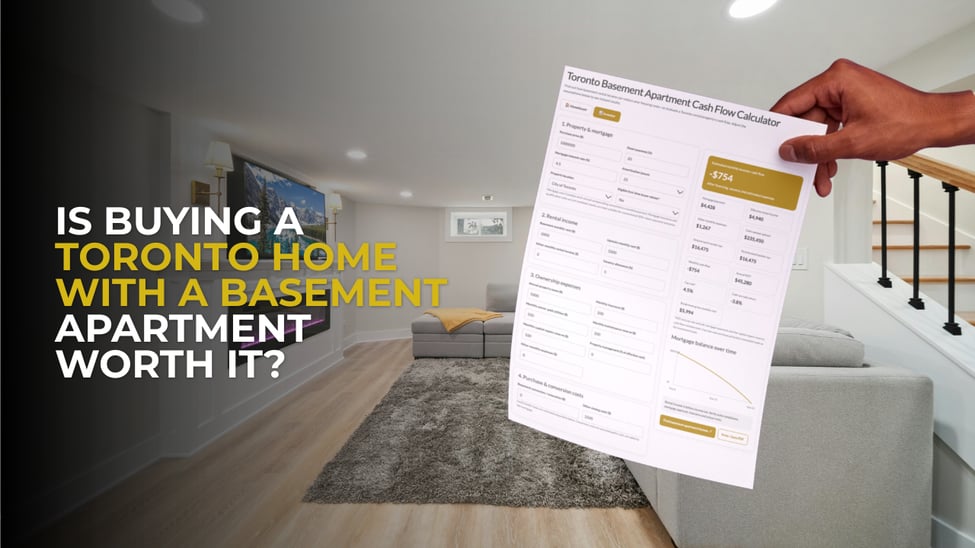
Buying a home in Toronto is a significant financial commitment. With property prices, mortgage payments, and the cost of living all influencing affordability, many buyers are looking for ways to make homeownership more financially manageable.
One option worth considering is buying a Toronto home with a basement apartment. A property with a separate basement living space may provide rental income, help offset monthly housing expenses, and offer additional flexibility for homeowners and real estate investors.
However, not every basement apartment is a good investment. Rental income, purchase price, renovation costs, legal compliance, and ongoing expenses all play an important role in determining whether a property makes financial sense.
So, is buying a Toronto home with a basement apartment worth it? Let's explore the potential benefits, costs, risks, and key considerations before you make a decision.
What Is a Home with a Basement Apartment?
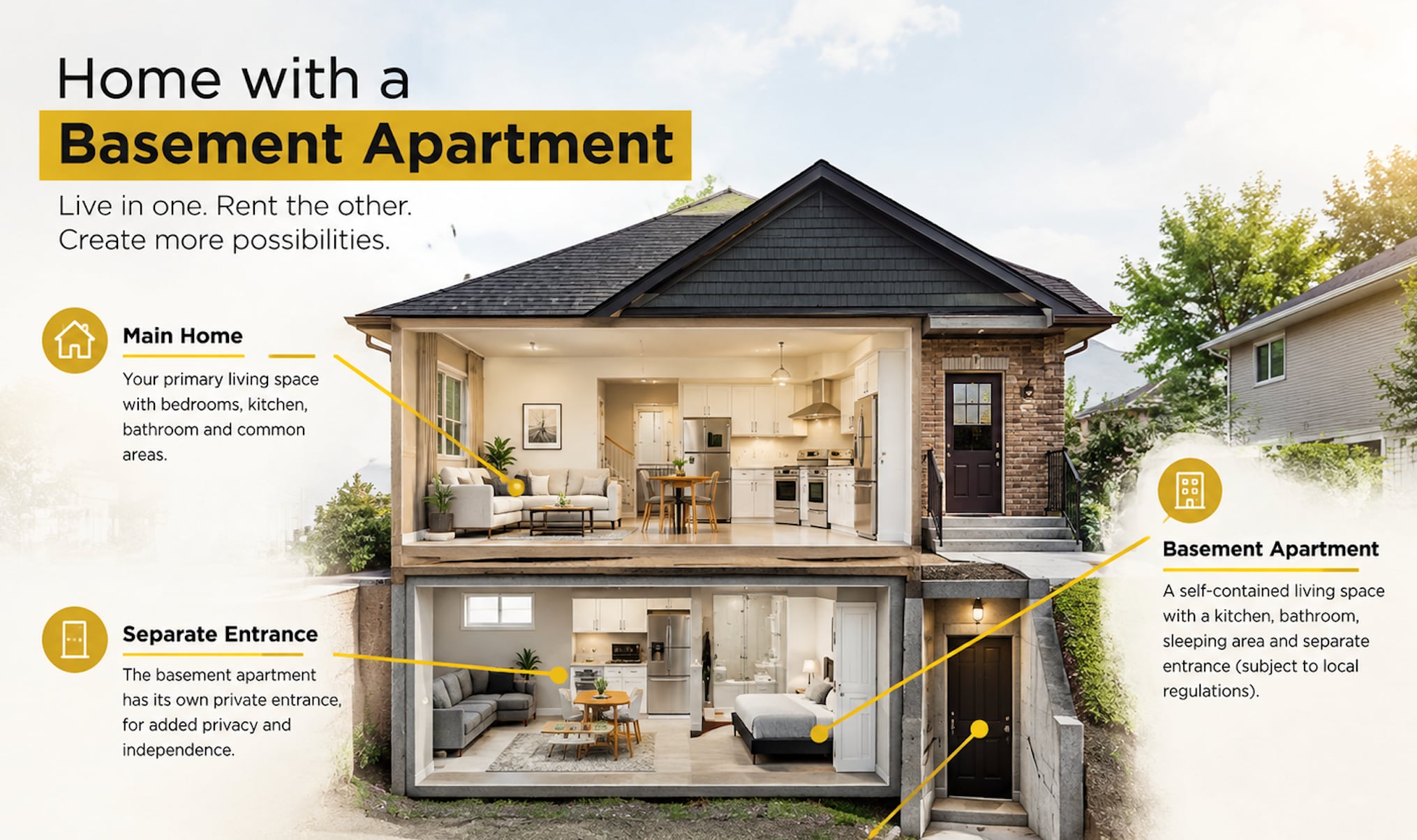
A home with a basement apartment is a property that includes a separate living space within the basement. Depending on its design and legal status, the unit may have its own kitchen, bathroom, sleeping area, and separate entrance.
For homeowners, this setup can create an opportunity to generate rental income while living in the main portion of the property. For investors, it can provide an additional source of income that may help support the property's overall return.
However, it is important to distinguish between a basement that has been finished for personal use and a basement apartment that is legally permitted for rental occupancy. A finished basement does not automatically qualify as a legal secondary suite.
Before purchasing, buyers should verify the property's permitted use, applicable building and fire safety requirements, zoning considerations, and any relevant municipal registration requirements.
5 Reasons to Consider Buying a Toronto Home with a Basement Apartment
1. Rental Income Can Help Offset Your Mortgage
One of the biggest advantages of purchasing a home with a basement apartment is the potential to earn rental income.
Rather than covering the entire mortgage payment and household expenses yourself, you may be able to use rent from the basement unit to offset a portion of those costs.
For example, imagine purchasing a property with a basement apartment that generates $1,800 in monthly rent. That would represent $21,600 in potential gross rental income annually, assuming the unit is occupied and rent is collected throughout the year.
However, gross rental income is not the same as profit. You will still need to account for expenses such as utilities, insurance, maintenance, repairs, vacancy periods, and any additional financing costs.
The key question is not simply how much rent the property can generate, but how much income remains after expenses.
2. It May Improve Housing Affordability
Toronto housing costs can make it challenging for buyers to enter the market while keeping monthly expenses manageable.
A home with a basement apartment may offer a practical middle ground: you can purchase a property for your own use while receiving rental income from a separate unit.
For example, a first-time buyer might live upstairs and rent the basement to a tenant. A growing family could use the rental income to help manage household expenses while retaining the option to use the basement differently in the future, subject to applicable regulations and existing tenancy obligations.
This strategy does not eliminate the costs of homeownership, but it may improve affordability when the numbers work.
3. You Could Benefit from Long-Term Property Appreciation
A property with a basement apartment may appeal to a wider range of future buyers, including families seeking additional income, investors looking for rental opportunities, and homeowners who value flexible living arrangements.
That potential demand may be beneficial when it comes time to sell. However, a basement apartment does not guarantee a higher resale price or faster sale.
Location, lot size, property condition, layout, parking, transit access, and the legal status of the secondary suite can all affect resale value.
Buyers should assess the home's overall market value rather than assuming that rental potential alone makes it a better investment.
4. It Can Offer More Flexibility for Future Needs
A basement apartment may serve different purposes as your circumstances change.
You might rent it to a long-term tenant today, use it for an eligible family member in the future, or reconsider how the space is used as your household grows.
This flexibility can be valuable, but the options available to you will depend on the unit's legal status, applicable regulations, and any existing tenancy agreements.
If rental income is central to your purchase decision, make sure the property can legally support your intended use before relying on that income in your financial plan.
5. It May Create a Value-Add Opportunity
For buyers interested in investment real estate, a property with an unfinished basement or an existing but outdated secondary suite may present an opportunity to add value.
Potential improvements might include upgrading the layout, improving sound insulation, modernizing the kitchen and bathroom, or creating a more functional separate entrance.
In some cases, a property with an unfinished basement may be worth investigating if the purchase price leaves enough room for renovation costs and a reasonable return.
However, not every basement can be converted economically. Ceiling height, foundation conditions, moisture, windows and emergency egress, plumbing, electrical capacity, fire separation, and other requirements can significantly affect feasibility and cost.
Before purchasing a property that needs work, obtain appropriate inspections, investigate permit requirements, and get realistic renovation estimates.
How Much Rental Income Can a Toronto Basement Apartment Generate?
Rental income varies depending on the neighbourhood, unit size, number of bedrooms, condition, amenities, transit access, parking, and current market demand.
A basement apartment in a well-connected neighbourhood may attract a different rent than a smaller unit in an area with fewer amenities.
Rather than relying on a general estimate, research comparable rental listings in the property's immediate area. Consider how the unit compares in terms of size, layout, private entrance, laundry, natural light, utilities, and included parking.
You should also distinguish between the rent a landlord hopes to receive and the rent the market is likely to support.
Most importantly, evaluate the property based on realistic rental assumptions rather than an optimistic scenario.
Want to see what your numbers could look like?
Use the basement apartment cash flow calculator to estimate potential rental income against mortgage payments and other property expenses.
The Costs of Owning a Home with a Basement Apartment
Rental income can make a property more attractive, but it is essential to account for the full cost of ownership.
Mortgage and Financing Costs
Your mortgage payment will depend on the purchase price, down payment, interest rate, amortization period, and financing terms.
Lenders may have different requirements for properties with rental units, and their treatment of projected rental income can vary. Speak with a mortgage professional to understand your borrowing options before making an offer.
Property Taxes and Insurance
Property taxes remain part of your ownership expenses. Insurance premiums may also differ depending on the property's configuration and whether you have tenants.
Tell your insurer about the rental unit and confirm that your coverage is appropriate for your intended use.
Utilities and Maintenance
Depending on the property's setup and lease agreement, you may be responsible for some or all utilities. You should also budget for routine maintenance, repairs, and replacement of major components.
A furnace, water heater, plumbing issue, or basement moisture problem can affect your cash flow significantly.
Vacancy and Tenant-Related Expenses
You should not assume that your unit will be occupied every month. A vacancy allowance helps account for periods without rental income, while a separate contingency can help cover unexpected repairs.
Landlords must also comply with applicable Ontario tenancy laws, including rules governing rent, maintenance, lawful entry, and ending a tenancy.
Renovations and Legal Compliance
If the basement requires upgrades, obtain estimates before deciding how much you can afford to pay for the property.
Depending on the work and the unit's circumstances, permits, inspections, fire safety improvements, and other compliance measures may be necessary. Existing construction should not be assumed to be compliant simply because it has been in place for years.
Ready to evaluate a specific property?
Use the basement apartment cash flow calculator to test different rent, expense, and mortgage assumptions before moving forward.
What to Check Before Buying a Home with a Basement Apartment in Toronto
Before making an offer, investigate the property beyond its appearance and advertised rental potential.
Confirm the Legal Status of the Basement Apartment
Ask for relevant permits, inspection records, registration documentation where applicable, and information about the unit's approved use.
Confirm requirements with the appropriate municipal department. Do not assume that a unit is legal because it has a kitchen, a separate entrance, or a history of being rented.
Inspect the Basement for Moisture and Structural Issues
Basements can be vulnerable to water infiltration, drainage problems, mould, and foundation concerns.
A professional inspection can help identify visible warning signs and determine whether further specialist assessment is necessary.
Review Fire Safety and Egress
Secondary suites may be subject to requirements involving fire separation, smoke and carbon monoxide alarms, exits, windows, and other safety features.
Have qualified professionals assess the property against the requirements that apply to the specific unit.
Research Comparable Rental Properties
Review comparable units in the same neighbourhood to develop a realistic rent estimate.
Pay attention to differences in size, condition, included utilities, parking, laundry, and accessibility. A rental estimate based on a superior unit may overstate the income your property can achieve.
Calculate Your Total Investment
Include the down payment, closing costs, potential land transfer tax, legal fees, inspections, immediate repairs, renovation expenses, and an appropriate cash reserve.
If the property needs a basement conversion, determine whether the work is feasible before assigning a rental value to a unit that does not yet exist or cannot yet be occupied.
Consider Your Long-Term Strategy
Are you buying primarily to live in the home, generate rental income, build equity, or create a value-add opportunity?
Your answer will influence how you evaluate cash flow, location, property condition, and the amount of renovation risk you are willing to accept.
Is Buying a Toronto Home with a Basement Apartment Better Than Buying a Regular Home?
Neither option is automatically better. The right choice depends on your finances, lifestyle, and investment objectives.
A home with a basement apartment may provide rental income and greater flexibility, but it can also involve additional responsibilities, tenant management, maintenance, and compliance considerations.
A home without a basement apartment may better suit buyers who value simplicity, privacy, or a layout designed entirely around their household.
The most useful comparison is between specific properties at realistic purchase prices. Evaluate each home's total monthly carrying costs, condition, location, potential resale appeal, and suitability for your needs.
If the basement apartment meaningfully improves affordability or supports your investment strategy without introducing excessive financial or regulatory risk, it may be worth pursuing.
Final Thoughts: Is a Toronto Home with a Basement Apartment Worth It?
Buying a Toronto home with a basement apartment can be a worthwhile strategy for homeowners and investors who understand the numbers and do their due diligence.
The potential benefits include rental income, help with monthly housing costs, flexible living arrangements, and opportunities to add value through improvements. However, those benefits depend on the property's purchase price, legal status, rental demand, financing, operating expenses, and condition.
Before committing, estimate realistic rent, calculate cash flow, investigate compliance requirements, and account for unexpected costs.
The goal is not simply to find a property with a basement apartment. It is to find one that makes sense for your financial situation and long-term plans.
If you are exploring Toronto homes with basement apartments, working with a real estate professional who understands investment potential and value-add opportunities can help you compare options and identify the questions worth asking before you buy.
Explore Your Next Real Estate Opportunity
Looking for a Toronto property that combines homeownership with rental potential? Start by exploring available homes with basement apartments, then evaluate the numbers to determine which properties may fit your goals.
Sol Yasin
647-207-0470
Realtor | Right At Home Realty, Brokerage
Helping buyers and investors explore real estate opportunities across the Greater Toronto Area.